
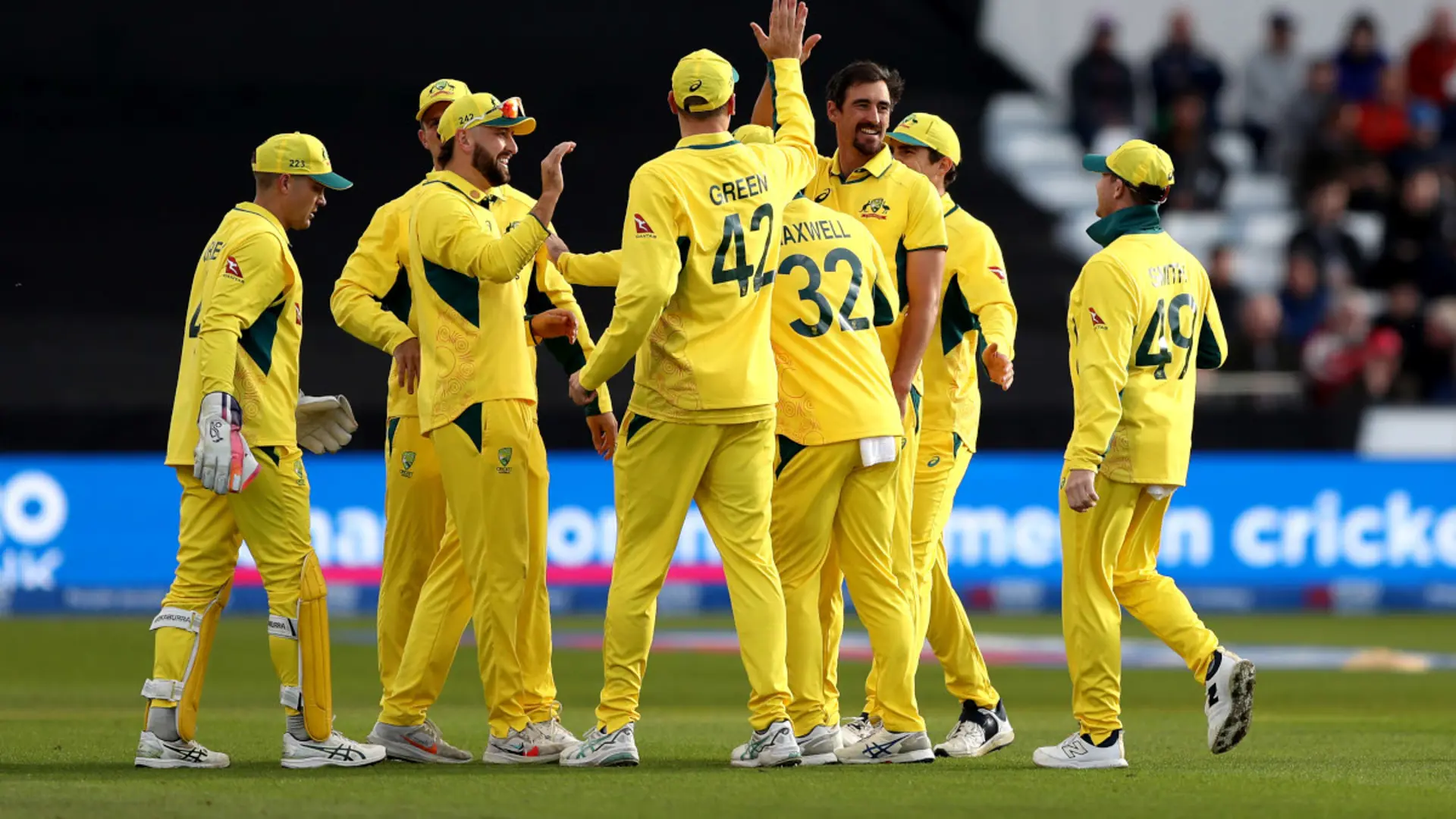

So, who’s in, who’s out, who’s fortunate to be there, and who might be playing their final Ashes?
The Waiting List
At the risk of sounding harsh, this Ashes squad could easily double as the waiting list for a retirement village.
When it comes to age, most of these players are closer to 40 than 20 which is excellent when talking batting averages, not so much when talking athleticism.
That’s not to say they aren’t performing. They clearly are. But you can’t help wondering if a younger version of this Australian team, say, five to seven years ago, might have handled South Africa differently in the World Test Championship final at Lord’s in June.
So, while this may be the best team available right now, the real question is: how many of these players are still at their peak? In other words, who is better 2015 Steve Smith or 2025 Steve Smith? Unfortunately, it doesn’t look like many are still at their absolute best.
And if you think the age issue is overstated, just look at the numbers:
Usman Khawaja is 38.
Nathan Lyon turns 38 before the series starts.
Steve Smith and Scott Boland are both 36.
Aside from the injury-prone Cameron Green, everyone else in the squad is over 30.
Captaincy
Much has been made of Pat Cummins’ race to be fit for the series opener a race he’s lost. In his absence, Steve Smith will once again take the reins.
Smith is a proven captain. His win rate of 69.69% may sit just below Cummins’ 74%, but both numbers are exceptional. Smith also boasts a better Test record when leading the side. averaging 68.98 as captain compared to 49.90 when not.
That puts him ahead of legendary skippers like Mark Taylor, Allan Border, and Greg Chappell.
So, while the leadership change wasn’t by design, Australia is in very capable hands.
Who Opens the Batting?
Usman Khawaja’s place at the top of the order is a given. But who partners him?
Sam Konstas filled the role on the Caribbean tour but has struggled for form.
At just 20, he’s still learning his craft, and his inexperience showed when he was left out of the WTC final in favour of Marnus Labuschagne.
Labuschagne himself endured a long lean patch, 30 innings without a Test century but has since rediscovered form, scoring four centuries in his last five domestic games. He’s put his hand up for a return and looks set to get the nod.
Konstas, meanwhile, has only passed 50 once in his last seven innings, so he can have few complaints about being dropped.
The Potential Debutants
Three lesser-known names have cracked the 15-man squad: Brendan Doggett, Sean Abbott, and Jake Weatherald.
Jake Weatherald (Tasmania) is an opening batsman averaging 37.63 in First-Class cricket, with three fifties in his last six innings. He’s unlikely to feature given Labuschagne’s resurgence, but his form keeps him in the conversation.
Sean Abbott, already capped in ODIs and T20s, is a lively bowling allrounder. However, with Cameron Green and Beau Webster ahead of him, a debut looks unlikely though he’s a reliable backup option.
Brendan Doggett, the South Australian quick who spent time at Durham, has been solid, taking 18 wickets in his last eight innings at an average of 25.22. Still, it’s tough to see him leapfrogging Mitchell Starc, Josh Hazlewood, or Scott Boland.
The common thread? All three are over 30. As former captain Steve Waugh recently pointed out, Australia needs to think about succession planning.
Young talents like Sam Konstas, Cooper Connolly, Campbell Kellaway, Oliver Peake, and Mahli Beardman might have been wiser long-term inclusions.
The Cameron Green Situation
If Cummins lost the fitness race, Cameron Green just scraped home. The talented allrounder has battled injuries but made a timely return for Western Australia against South Australia at the WACA.
He was dismissed for a duck in the first innings but fought back with 42 in the second, enough to prove his fitness to selectors. That said, he didn’t bowl in that match, which raises questions about his workload and durability.
If Green can’t play, expect Jake Weatherald to come into the XI.
Boland: The Ultimate Plan B
Few cricketers have been as unlucky as Scott Boland. He’s an outstanding bowler who’s spent his career in the shadow of equally outstanding teammates. But with Cummins sidelined, Boland is all but guaranteed a spot.
And here’s a fun stat: Boland holds the best Test bowling average of any player in the past century 16.53. Only bowlers from the 1800s (on matting wickets, no less) boast better numbers.
So, while he may be in the twilight of his career, the big Victorian remains a formidable weapon, Australia’s best “Plan B” by far.
Did George Bailey Get It Right?
It’s hard to argue that this isn’t Australia’s strongest possible XI for the Ashes opener.
Chairman of selectors George Bailey has leaned on experience and proven quality and in a home Ashes series, that’s hard to fault.
The real debate lies further down the list. Should Bailey have used the opportunity to blood a few younger players? Possibly. But this is the Ashes and in Test cricket, it doesn’t get bigger.
For now, conservatism feels like the right call. Experience wins series, and Australia will be banking on that old saying holding true one more time.